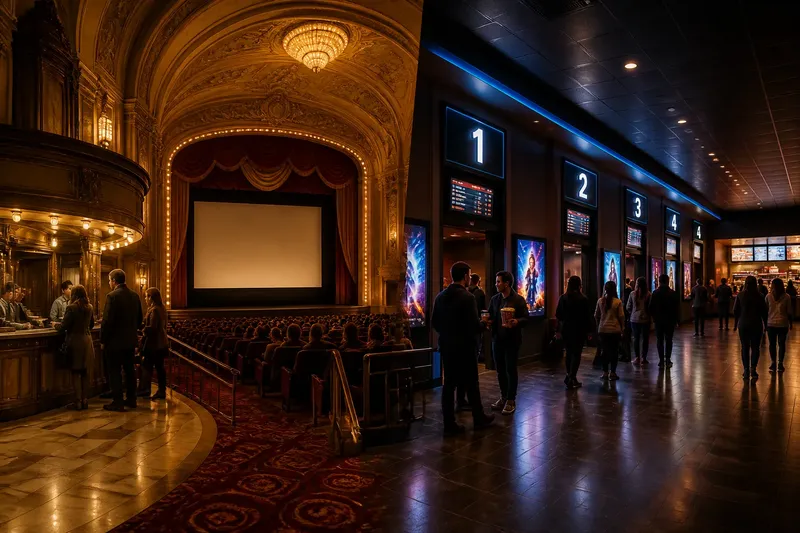
The Perfect Seat Is a Myth: Pick What Matters to You
Choosing a cinema seat is easier when you name your priority: a steady view, company beside you, or an unobstructed way to settle in and leave.
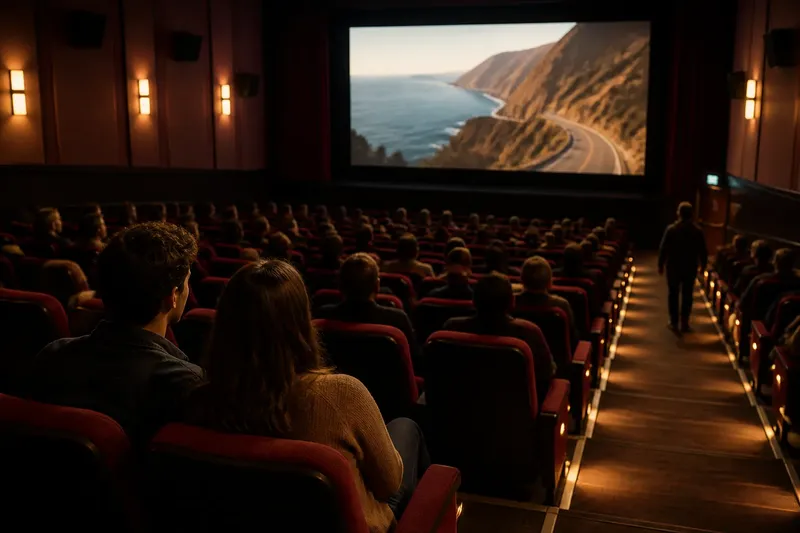
Choosing a cinema seat starts with the room in front of you, not a supposedly perfect row. A seat near the middle may suit a wide screen, while an aisle place may make a crowded arrival less awkward. The right choice depends on the theatre’s layout and the small demands of this particular outing.
Instead of ranking seats in the abstract, read the seating map for practical clues: where the aisles run, whether your group can sit together, and how far the seats are from the screen. If the map cannot answer a question that matters to you, ask the theatre rather than treating the diagram as a promise.
What does a cinema seat change?
A seat affects your angle on the screen, your view of passing patrons, and how easily you can move through the row. It also determines whether companions sit together and whether leaving during the film would disturb people nearby.
Rooms differ. Screens can be high or wide; floors may slope gently or steeply; aisles may run along a wall or through the seating. A map can show these arrangements, but it cannot convey every sightline or how the room will feel once it fills.
For that reason, avoid treating “center” or “aisle” as a complete description. A centered seat can involve a long walk past other patrons. An aisle seat can bring movement into your peripheral view. The useful choice is the one that fits the room and your plans.
When is a centered seat a good fit?
A seat near the screen’s horizontal center can make the image feel balanced. It may suit a film with subtitles or compositions that use the full width of the screen, particularly if you prefer to take in the whole frame rather than sit close to the action.
Distance matters, too. In one room, a middle row may feel comfortable; in another, the screen’s height or the floor’s slope may change the experience. Check the seating map for the room’s basic shape, then use your own preference for closeness as a guide.
Consider the route to the seat before booking. If arriving after the lights dim or stepping out during the film is likely, a spot deep in a full row may be inconvenient. A seat slightly off center can be a fair exchange for easier movement.
Imagine you are booking for two people at a neighborhood theater. The map shows a wide screen, a gently sloped floor, and an available pair near the center; you both want to follow subtitles and do not expect to leave. Choosing that pair trades a longer walk through the row for a balanced view. If one of you expects to step out, a nearby pair at the aisle may be the better compromise.
When should sitting together come first?
If sharing the screening is the point of the outing, adjacent seats may matter more than a small improvement in angle. A pair just off center can be a better choice than separated seats closer to the middle.
Look closely at how the seats are arranged. Curved rows can make seats at opposite ends feel farther apart, while an aisle between seats splits a group. If you need accessible seating or a companion space, check the venue’s own information; layouts and policies vary.
It is not worth trying to solve a difference in taste with an elaborate seating-chart debate. Agree on the main preference, then look for adjacent seats that do not create a problem either person will notice throughout the film.
Who might prefer an aisle seat?
An aisle seat can make it easier to settle in, help a child leave the room, or get out without asking several people to move. It may also feel less confining if you dislike being boxed in by a row.
The trade-off is movement nearby. Patrons may pass in front of you, and a door or exit light may draw your attention. An aisle beside a wall can feel different from one that runs through the middle of the room, so check the map for the aisle’s position.
Think about the route as well as the seat. The closest door may bring more foot traffic or light; another aisle may offer a quieter view while still making departure straightforward. For an access concern, obstruction, or venue-specific question, contact staff rather than guessing from the diagram.
How do I choose a cinema seat for a specific need?
Where should I sit for a balanced view?
Look near the horizontal center, then choose a distance that feels comfortable for taking in the whole screen. Use the room’s layout as a guide, not as a promise about the view.
Is an aisle seat better when I am with someone?
It can be, if easy movement matters to one or both of you and adjacent seats are available. If passing traffic would distract you, look for a pair farther from the aisle.
What should I choose if I may need to leave?
Look for an aisle with a clear route out, then consider whether its position brings passing patrons or door light into view. If leaving is related to an accessibility need, ask the venue which seats and routes are suitable.
Can a seating map tell me what the view will be like?
It can show rows, aisles, and available pairs, but not every sightline or the feel of the room. Contact the theatre if a screen obstruction or a specific access concern could change your choice.
What details are not worth optimizing?
It rarely helps to search a seating chart for one magic seat number. Small shifts across a row may matter less than whether your companions sit together, whether you can reach the aisle, or whether the front row feels too close for your taste.
There is no need to invent precision where the map gives only a rough layout. Choose a seat that avoids the drawback you would notice most, and let minor preferences remain minor.
What should I check before booking?
- Screen position: Check whether the available seats are near the horizontal center. If a balanced view matters most, choose the closest suitable pair; if movement matters more, compare aisle options.
- Distance from the screen: Check how close the available row is to the screen. If you prefer the full image in view, choose a row farther back when available; if you enjoy a more enveloping view, consider a nearer row.
- Group seating: Check whether everyone can sit together. If adjacent seats are available, book them; if not, decide whether to accept separation or choose another screening.
- Aisle position: Check whether an aisle runs beside the seats or through the group. If a clear route matters, choose seats with direct aisle access; if passing traffic would distract you, select a pair away from that flow.
- Door and exit location: Check how close the seats are to a door. If quick access matters, choose a route that suits it; if light or traffic could distract you, look for another aisle.
- Accessibility information: Check the venue’s details for accessible spaces, companion seating, and routes. If the information does not answer your question, contact staff before booking; if the arrangement will not work, ask about another location or screening.
Choosing a cinema seat is easier when you treat the map as a tool for reading the room, not as a ranking. A balanced view, seats together, or a simple route out can each be the deciding detail. Once you know which one matters for this visit, the remaining trade-offs are easier to judge.