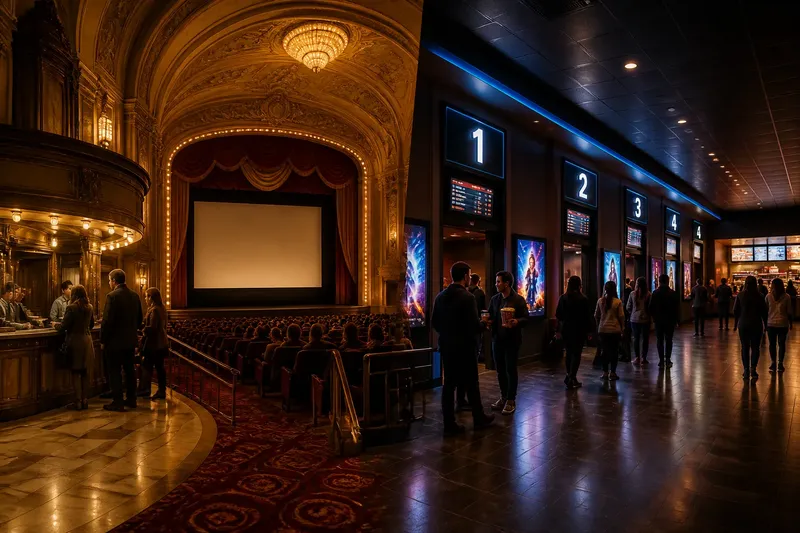
Why Cinema Foyers Give a Screening Its Own Threshold
A cinema foyer can make the move from street to screen feel clearer. Choose a simple pause, meeting point, or direct route that suits your visit.
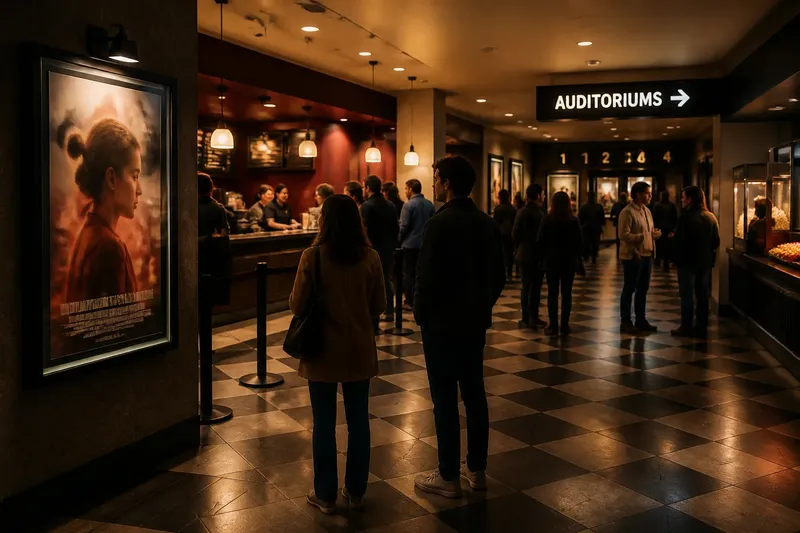
A cinema foyer shapes how a screening begins. In a neighborhood theatre, its ticket desk, signs, and passage to the auditorium help turn a public lobby into a shared room for watching a film.
That shift comes from the space as much as from any personal routine. A narrow corridor asks you to keep moving; a lobby with a poster case gives companions a place to meet. Not every foyer offers a quiet corner, and none needs to become a destination in its own right.
What does a cinema foyer need to make clear?
A useful foyer makes the next action legible. You should be able to see where tickets are checked, where the auditorium doors are, and where people can stand without blocking the queue. Clear sightlines matter more than decorative touches when the lobby is busy.
The arrangement also sets a tone. A counter beside the entrance keeps arrivals close to the street’s bustle; a lobby that opens toward the auditorium gives the screening a more gradual beginning. The foyer is working well when you can orient yourself without having to stop in the path of others.
How do you choose a meeting point?
- Poster case: Check whether it is visible from the entrance and outside the ticket line. If it is, agree to meet there; if not, choose a clearer landmark such as the ticket desk.
- Ticket desk: Check whether a queue forms in front of it. If the area stays open, use it as a landmark; if the queue blocks access, meet beside the entrance or another visible sign.
- Auditorium sign: Check that the sign is easy to identify before entering the auditorium. If it is, use the screen number as the meeting point; if several signs are close together, name a specific wall or display instead.
- Lobby entrance: Check whether people can stand there without obstructing arriving patrons. If there is room, meet just inside the doors; if the entrance is congested, move the meeting point farther into the lobby.
- Concession counter: Check whether it is easy to spot and whether waiting customers fill the surrounding space. If it remains visible, use it as a landmark; if its line spreads across the lobby, choose a less crowded feature.
- Accessible route: Check whether the path from the entrance to the auditorium stays clear. If it does, choose a meeting point along the route but out of its flow; if it is narrow or crowded, meet in a nearby open area instead.
It is not worth inventing an elaborate rendezvous for a familiar theatre. A precise, visible landmark usually solves the problem without making arrival feel like another appointment.
Which small routines suit different visits?
A routine should respond to the lobby you have, not impose a performance on it. If you are coming from work, putting your phone away after handling any urgent message may help you stop tracking unfinished tasks. If the foyer is crowded, checking your ticket while moving toward the auditorium is more considerate than pausing in a doorway.
Say you are meeting a friend at a small theatre, and the poster case is beside the ticket line. You start with the poster case as your meeting point, but see that the line has reached it. You move the plan to the auditorium sign, check that the sign names your screen, and ask your friend to meet beside it rather than in front of the doors. The result is a clear landmark that leaves the queue and entrance open; if the sign is also crowded, you can meet just inside the lobby entrance instead.
What do people ask about cinema foyer routines?
Should you arrive early if you need to meet someone?
Allow enough time to reach the agreed landmark and confirm the auditorium, rather than relying on a vague instruction to meet “inside.” If the lobby is filling quickly, move the conversation away from the ticket line and doors.
What if you want the screening to feel separate from work?
Finish any necessary reply before you enter the auditorium, then silence notifications if that suits your plans. A simple shift of attention is enough; the foyer does not need a special ritual.
Can the foyer be a quiet buffer?
Use a quieter edge only if it is open and does not block a queue or doorway. If people are moving through the whole lobby, continue toward the auditorium rather than trying to claim a corner.
What if you prefer not to linger?
Check your ticket and screen information before reaching the doors, then go in when entry is open. A direct route is a complete way to use the foyer, especially in a compact theatre.
How does the layout affect the move into the auditorium?
Notice whether the ticket check, signs, and auditorium doors form a clear route or send arrivals across the busiest part of the lobby. If the path is straightforward, you can keep moving without losing your bearings. If signs are hard to see, pause at the edge of the flow to confirm the screen before proceeding.
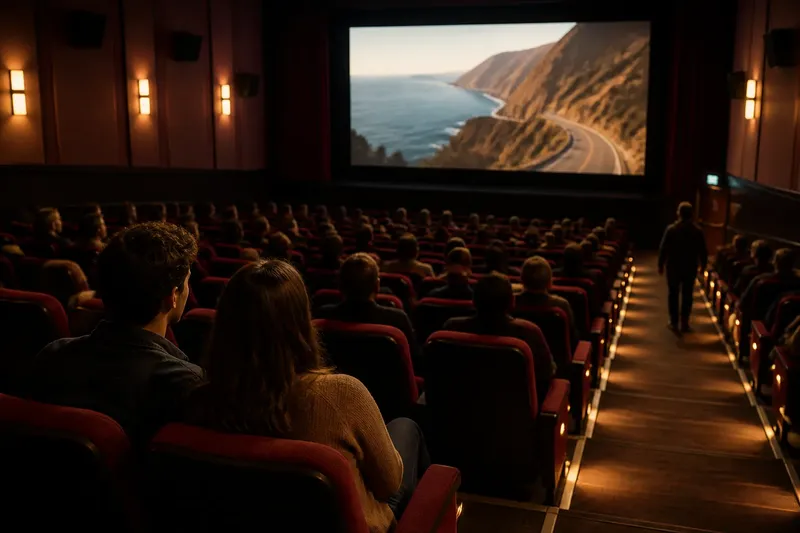
The auditorium changes the social terms of the visit. In the foyer, people talk, check tickets, and find one another; inside, attention gathers around the screen. A door, a change in light, or the usher’s direction can make that shift noticeable without requiring silence in the lobby or a long wait before the film.
A cinema foyer’s value lies in how well it handles ordinary arrivals. Find a visible meeting point, keep the shared route clear, or head directly to your seat. The best routine is the one that lets you enter the auditorium oriented, while leaving the foyer usable for everyone else.